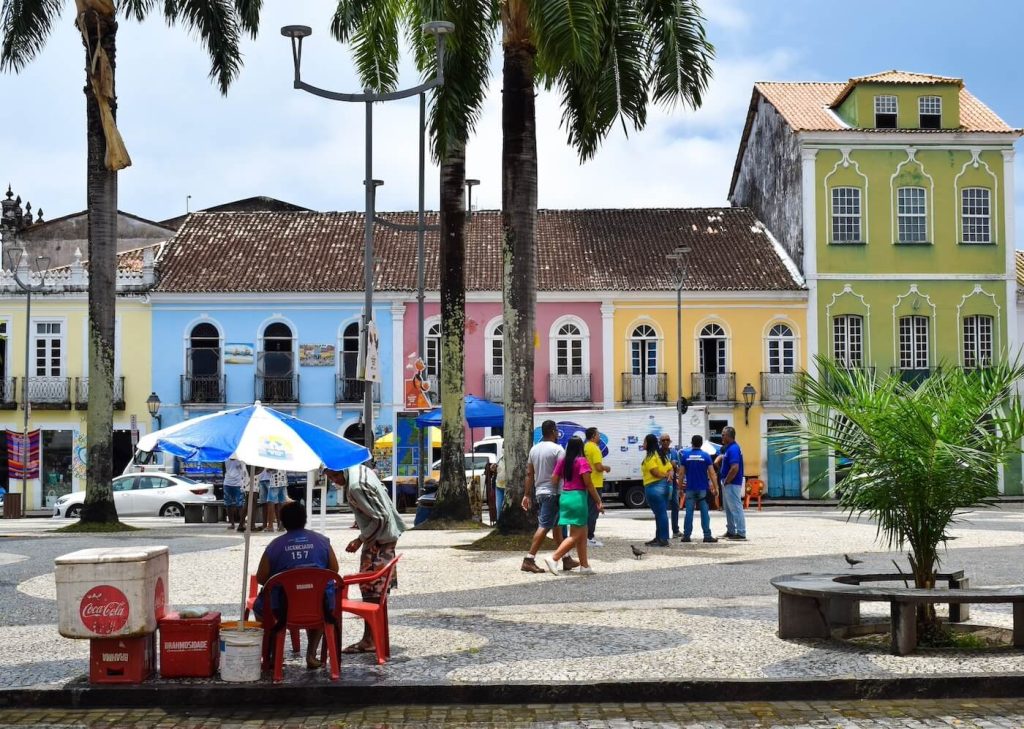

Salvador da Bahia is one of Brazil’s most beautiful and vibrant cities. Known for its rich colonial history, the city center feels like an open-air museum from the 17th and 18th centuries. Paved plazas, impressive monuments, photogenic streets, and colorful buildings create a stunning, picture-perfect backdrop for visitors. But behind the colorful streets and photogenic squares lies a deeper history. Salvador da Bahia has a rich colonial and slavery past, and the long struggle of Bahia’s Black population is still visible today, preserved in the city’s many monuments and historical sites. Discover the vibrant city of Salvador da Bahia, its fascinating sights, and rich history with my personal tips.
Salvador da Bahia's turbulent past
In the 16th century, Portuguese sailors arrived in Salvador to colonize Brazil. By 1549, Salvador was declared the capital of Brazil. Its strategic coastal location made it a key gateway for trade, particularly in sugarcane cultivation and export. The wealth generated from sugar fueled the construction of impressive buildings, including colorful monumental structures and ornately decorated churches that still define the city’s historic skyline.
However, amid Salvador’s growing prosperity, there was a dark side: the transatlantic slave trade. Enslaved Africans were brought to the city to work on nearby sugar plantations, and for three and a half centuries, Salvador was profoundly shaped by slavery. Despite this harrowing past, eastern Brazil stands out for its remarkable preservation of African culture. Today, African traditions, music and dance, religion, and culinary influences remain an integral part of everyday life in the city.


The best sights in Salvador da Bahia
Salvador da Bahia is bursting with culture and history, making it a city to truly see, smell, feel, and taste! Some of the most beautiful and iconic sights to explore in Salvador include:
1. The Pelourinho district
One district you shouldn’t miss in Salvador is the colorful Pelourinho. As the historic heart of the city and a UNESCO World Heritage Site, it’s easy to see why it’s so famous. Also known as Cidade Alta (Upper Town), Pelourinho is filled with stunning Baroque-style buildings. The district is also home to numerous restaurants and bars, offering the perfect opportunity to experience the local cuisine of Bahia.


2. Elevador Lacerda
The best way to reach the vibrant Pelourinho district is via the Elevador Lacerda. Built on a cliff, Salvador is divided into the upper town (Cidade Alta) and lower town (Cidade Baixa). The upper town is, without a doubt, the most charming and packed with the city’s top sights. Hop on the Elevador Lacerda and in just 30 seconds, you’ll be whisked to the top for only around €0.03. Once there, you’re rewarded with breathtaking views of the sparkling sea and bustling port from Praça Tomé de Souza, a ride you won’t want to miss!
3. Mercado Modelo
Another must-visit spot is Mercado Modelo at Cayru Square. This bustling market hall is full of charming souvenir shops, local delicacies, and inviting restaurants, all under one roof. Wandering through Mercado Modelo is not only a fun shopping experience, but also a great way to get a taste of local life and sample the delicious cuisine of Salvador.
At many of the stalls you will see that they are selling colored ribbons. These are "Fita do Bonfim". The ribbons have the phrase "Lembrança do Senhor do Bonfim da Bahia" (Remembrance of the Lord of Bonfim of Bahia). You tie a ribbon around your wrist, make three knots, and make a wish at each knot. Legend has it that the wishes come true when the ribbon naturally falls off. You’ll see these ribbons all over the city, making them a vibrant symbol of Salvador da Bahia.


4. Museum Memorial das Baianas
In the lively Praça da Sé square in Pelourinho, you’ll find a striking memorial to the Baianas, the iconic women of old Salvador. The sculpture of a smiling Baiana captures their spirit, and right next to it, a small museum offers more insight into their rich cultural heritage.
Next to the statue, you’ll also spot plenty of real Baianas walking around, mostly Afro-Brazilian women wearing turbans, embroidered blouses, abundant jewelry, and wide, traditional Baroque skirts. Many are dressed entirely in white, while others wear bright, colorful skirts. Some of these women sell the famous Bahian street food, “Acarajé,” offering a delicious taste of local tradition.
The Museum Memorial das Baianas is an important place to learn more about Bahian culture and the history of slavery. Here, you can also enjoy the beautiful view of the lower town (Cidade Baixa).


5. The churches of Salvador
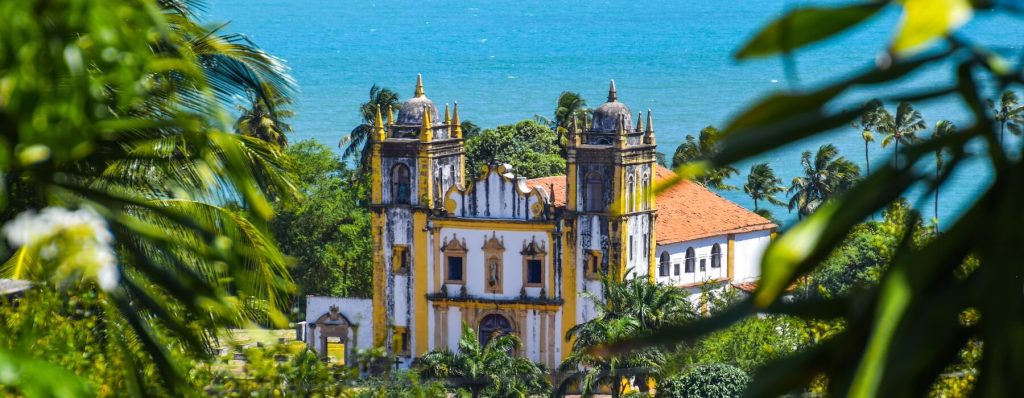
The churches of Salvador are truly not to be missed, as their splendor is breathtaking. One of the city’s most famous is Igreja do São Francisco in the Pelourinho district. Visitors are dazzled by its intricate Baroque decorations, adorned with golden scrolls and elaborate details. Built between 1708 and 1723, Igreja do São Francisco is regarded as one of the finest examples of Portuguese-Brazilian Baroque architecture.
Another must-visit church is Igreja do Nosso Senhor do Bonfim, located in the lower part of Salvador in the Bonfim neighborhood. As the city’s main church, it draws pilgrims from all over Brazil. While more austere than the richly decorated Igreja do São Francisco, its stunning ceiling paintings and beautiful Portuguese tiles make it a true highlight in Salvador.
The best places to stay in Salvador
Salvador is a large and vibrant city with plenty of accommodation options. One of the best areas to stay is the historic city center Pelourinho. You’ll be surrounded by colorful streets, colonial architecture, and easy access to the city’s top sights. There are great accommodation options here, such as Hotel Villa Bahia and Bahiacafé Hotel.
The charming Hotel Villa Bahia located in the heart of Salvador's historic center, in 2 traditional colonial houses with a terrace with panoramic views of Pelourinho Square. A stay costs on average between €100.00 and €200.00 per room night. The small boutique hotel Bahiacafé Hotel is located in a building from the 18th century and is next to the popular Praça da Sé square. Prices range from €70.00 to around €100.00 per room per night.
Another nice area to stay is Rio Vermelho. This is a charming neighborhood with colorful streets and a lively scene of trendy restaurants and bars. Rio Vermelho Beach (also known as Ondina Beach) is particularly popular with locals. In the early morning, you can watch fishermen setting out to sea in their boats, a truly authentic local experience. The accommodation where we stayed in Rio Vermelho is Pousada e Hostel Chez Marianne. A simple, but very nice place to stay. Breakfast here is also very tasty. You pay between €20.00 and €50.00 per night for a room here.
All the above prices are rates in 2024.
The most delicious dishes to taste in Salvador da Bahia
Brazilian cuisine is incredible, and in Bahia, I might have tasted some of the most delicious dishes in the country. Fresh fish is a staple here, making Salvador (and the entire state of Bahia) a paradise for seafood lovers. Don’t miss trying typical Bahian specialties such as acarajé, moqueca, and bobó, each bursting with rich flavors and local tradition.
Often bought at stalls and street vendors, acarajé is a dish made from shelled beans formed into a ball and then deep fried in palm oil. It is filled with a spicy paste made from shrimp and cashew nuts, among other ingredients. I wasn't a fan when I tried it, but of course there's only one way to find out what you think of it.
Moqueca is a tropical stew with fish, shrimp, tomatoes, peppers, coconut milk and lime juice. It is somewhat similar to a curry and is one of the most delicious dishes I have eaten in Brazil. The dish bobó is somewhat similar to this, but is a lot thicker and creamier in texture because cassava is used. For the very best moqueca and bobó, I recommend the restaurant Ki-Mukeka in Salvador. Trust me, you won't regret it.
The most beautiful beaches of Salvador da Bahia
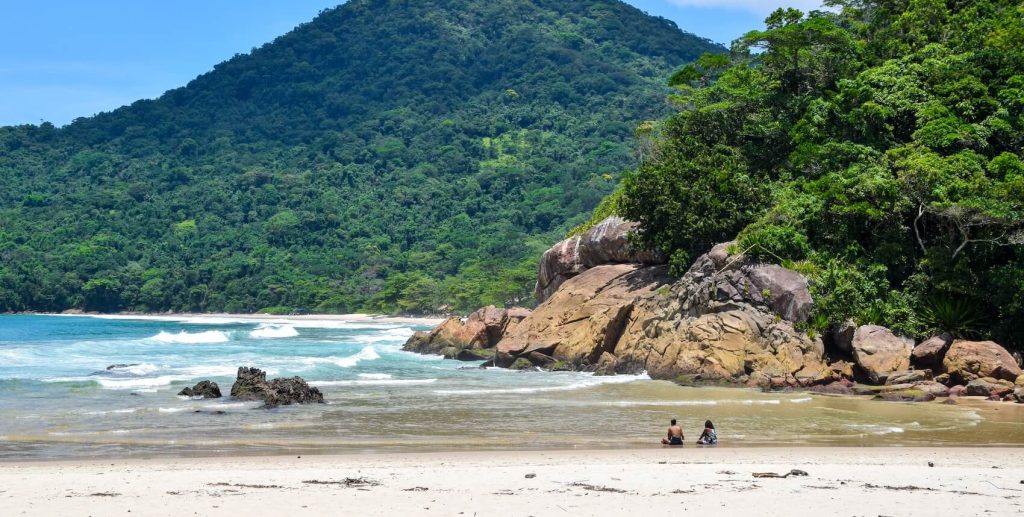
Situated on the Atlantic Ocean, Salvador is surrounded by beautiful white sandy beaches that are especially popular with locals. That said, I wouldn’t necessarily recommend Salvador as a primary beach destination, as Brazil offers many other coastal spots that are more visitor-friendly and, in some cases, safer. Still, if you want to spend a day by the sea, here are some of the best beaches in and around Salvador.
Praia do Farol da Barra
Praia do Farol da Barra, Salvador's main urban beach, is one of the most popular beaches in Salvador. With shallow water at low tide and good waves at high tide, this beach attracts both tranquility seekers and surfers. You'll also find one of Salvador's most iconic landmarks here, the Farol da Barra lighthouse. You can climb to the top of the lighthouse (especially recommended at sunset) and visit the Nautical Museum, which is located in the lighthouse.
Praia de Flamengo
Praia de Flamengo, one of Salvador’s most beautiful beaches, offers a peaceful escape from the city’s busiest areas. Lined with coconut palms, the beach features soft sand and a sea that forms natural pools at low tide, while high tide brings impressive waves. Along the shore, you’ll find cozy restaurants, beach clubs, and local stalls. Pick a sun lounger, order a refreshing drink, and soak up the glorious Bahian sun!


Praia do Forte
Praia do Forte is not located in Salvador itself, but about a 1.5-hour drive from the city, and it’s definitely worth a visit. From the moment you arrive, the vacation vibes hit you instantly. The resort has a charming village atmosphere, with plenty of beach clubs, restaurants, ice cream and açaí shops, and boutique stores. Praia do Forte is also home to a famous turtle sanctuary Projeto Tamar.
Projeto Tamar helps protect sea turtles from extinction on the Brazilian coast. Approximately 14,000 turtle nests are protected each year, and so far over 40 million turtles have been saved from various threats.
How safe is Salvador da Bahia?
Brazil is a vast country with a diverse population and significant social inequalities, and some areas have higher crime rates than others. In major cities like Salvador, it’s important to stay vigilant. I recommend leaving valuables at your hotel and avoiding wearing jewelry. Be especially cautious on empty streets or alleys at night, and take care when exploring the ladeiras (steep alleys) and other deserted streets on the outskirts of Pelourinho. The same goes for nearly deserted beaches—while it can be tempting to have the sand all to yourself, these areas are often empty for a reason. And always avoid going to the beach after dark.
Although I never felt directly unsafe in Salvador, I stayed alert. In the evenings, I always used Uber and was careful with my phone and camera. I highly recommend bringing a small waist bag (or money belt) that you can wear under your clothes. This is a smart choice not only in Salvador but in other Brazilian cities as well.
Extend your stay with a visit to Morro de São Paulo
In northeastern Brazil you will find many other beautiful places, such as Morro de São Paulo. In just 2.5 hours, you can travel from Salvador to the island of Tinharé, home to the charming fishing village of Morro de São Paulo. Stepping onto the island feels like entering a completely different world. With its incredibly relaxed atmosphere and stunning beaches, Morro de São Paulo is the perfect destination to unwind for 2–3 days after exploring the vibrant city of Salvador.
Discover more in Brazil
Salvador is a beautiful place full of culture and color, but Brazil has many more surprises in store for you.
Explore Rio de Janeiro's iconic highlights with its world-famous beaches and vibrant neighborhoods. Immerse yourself in the cultural and culinary offerings of São Paulo, the largest city in Brazil. Experience the authentic and colonial town of Olinda, a jewel on the Brazilian coast.
Fancy tropical beaches and relaxed vibes? Then discover the most beautiful beaches of Porto de Galinhas And plan a visit to The relaxed island of Florianópolis in Brazil.
For an undiscovered gem in northern Brazil, you definitely want to go to the national park Lençóis Maranhenses. And for a dose of history and impressive architecture, you may visit the picturesque Ouro Preto in Minas Gerais.

Design your dream Brazil trip
Dreaming of an unforgettable journey through northeastern Brazil? Be swept away by the rhythmic energy of Salvador da Bahia, relax on the paradisiacal beaches of Morro de São Paulo, explore the colorful charm of Pelourinho, and immerse yourself in Afro-Brazilian culture. We’ll create a tailor-made trip just for you, packed with unique experiences that suit your every need.