Planning an unforgettable city trip in Europe? Then Krakow might just be the destination you want to tick off your list. A city break in Krakow is one of Europe’s most pleasant surprises. This Polish city combines centuries of history with lively squares, interesting neighbourhoods, and trendy spots where you can eat incredibly well. In this article, we share our best travel tips for Krakow. We’ll take you along the city’s most iconic sights, such as the impressive main square and the fairytale-like Wawel Castle, but we’ll also go deeper. Think of the raw edges of the Jewish quarter Kazimierz and the hidden stories beneath the city’s surface. Get inspired by the most beautiful places and practical tips for your own adventure in this Polish gem.
1. Admire the Old Town in Krakow (Stare Miasto): Rynek Główny, the Cloth Hall and cathedrals
The beating heart of Krakow is around Rynek Główny, one of Europe's largest medieval squares. During the day, street musicians and packed terraces fill the square, while at night you stroll between the illuminated facades and church towers. Consequently, there is a super cozy and vibrant atmosphere here!
Tip: Looking for a place to stay near Krakow’s charming Old Town? We recommend TRIBE Krakow Old Town. In the morning, you can walk to the city’s main attractions in about 15 minutes, and after a cozy dinner at Rynek Główny, you’ll be back at your hotel in no time.
Rynek Główny (Krakow's Main Market Square)
With an area of approximately 40,000 m², Rynek Główny is one of the largest medieval squares in Europe. It dates back to the 13th century and is surrounded by historic churches, the Town Hall Tower, and the famous Cloth Hall.
An interesting fact is that the square was much lower in the 13th century than it is today. Through centuries of embankments, building activities and accumulation of layers (including after fires and devastations), the level rose meters.
Want to learn more about the Main Market Square in the Middle Ages? Visit Rynek Underground, an underground museum showcasing archaeological finds from the Middle Ages and offering insight into the city’s old trade routes and foundations.
St. Mary's Church in Krakow
At the Main Market Square, you’ll find the impressive St. Mary’s Basilica, with its two uneven towers that can be seen from afar. Inside, the richly decorated interior is breathtaking, but perhaps even more iconic is the moment when the trumpeter in the tower plays the traditional Hejnał motif. It is suddenly cut off, a nod to a historical legend deeply woven into the city’s identity.
The Cloth Hall (Sukiennice) on the Main Market Square in Krakow
On the square you will find the Sukiennice (Cloth Hall). In the past, this was an important center for the textile and cloth trade. Now you will find several small stores selling souvenirs and handicrafts. Very nice to stroll through when you go to Rynek Główny market square.
Kanonicza Street: the oldest street in Krakow
Walking from the historic centre towards Wawel Hill, you’ll inevitably pass Kanonicza Street. This is the oldest street in Krakow, where time seems to stand still and the architecture takes you straight back to the Renaissance era.
Among the historic buildings, the former episcopal palace at number 17 stands out in particular. This 16th-century building was once considered one of the most impressive houses on the street and combines Renaissance style with still-visible Gothic details. Today, it houses a branch of the National Museum in Krakow, featuring art from the Polish regions spanning from the Middle Ages to the 18th century.
Tip: Grab a traditional ‘Obwarzanek krakowski’ here, Krakow’s iconic pretzel. It has been sold since the 14th century, and across the city you’ll find around 180 stalls that together sell roughly 150,000 (!) pretzels every day.
2. Visit the Wawel complex in Krakow: more than just a castle
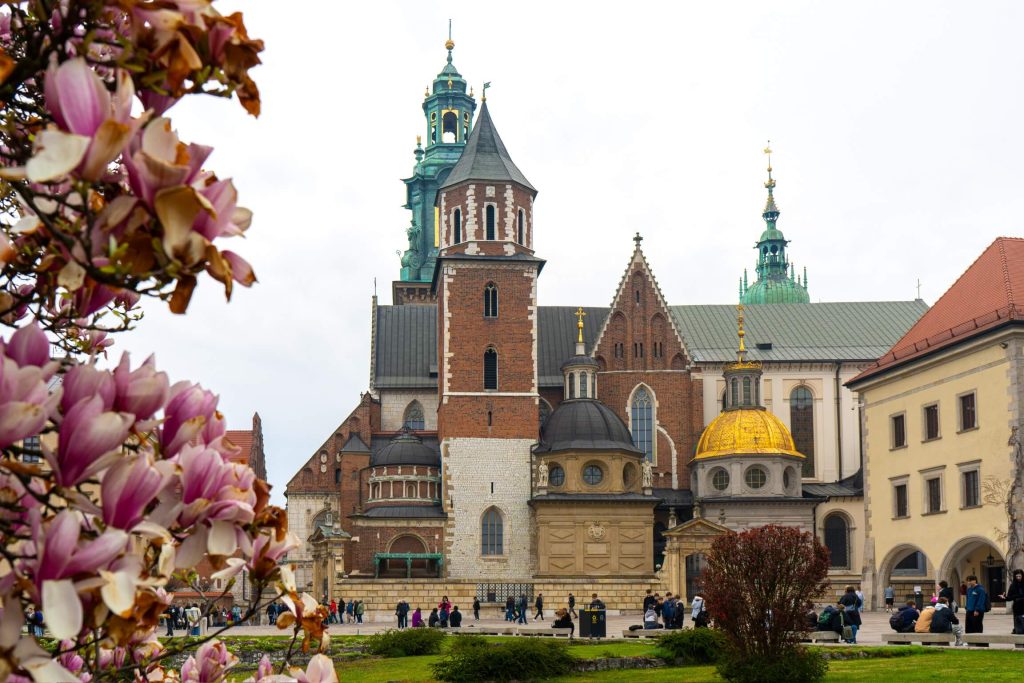
One of the most iconic sights in Krakow is undoubtedly Wawel Castle. But the Wawel complex is much more than just a castle. This is the place where the city originally began, long before the Main Market Square was built. Over time, Krakow grew outward from this hill, eventually developing into the city and surrounding green parks and gardens you see today.
On the hill, you’ll find the former royal castle, as well as the impressive Wawel Cathedral (basilica), where Polish kings were crowned and buried for centuries. Inside, you can still feel that history in the richly decorated chapels and royal tombs.
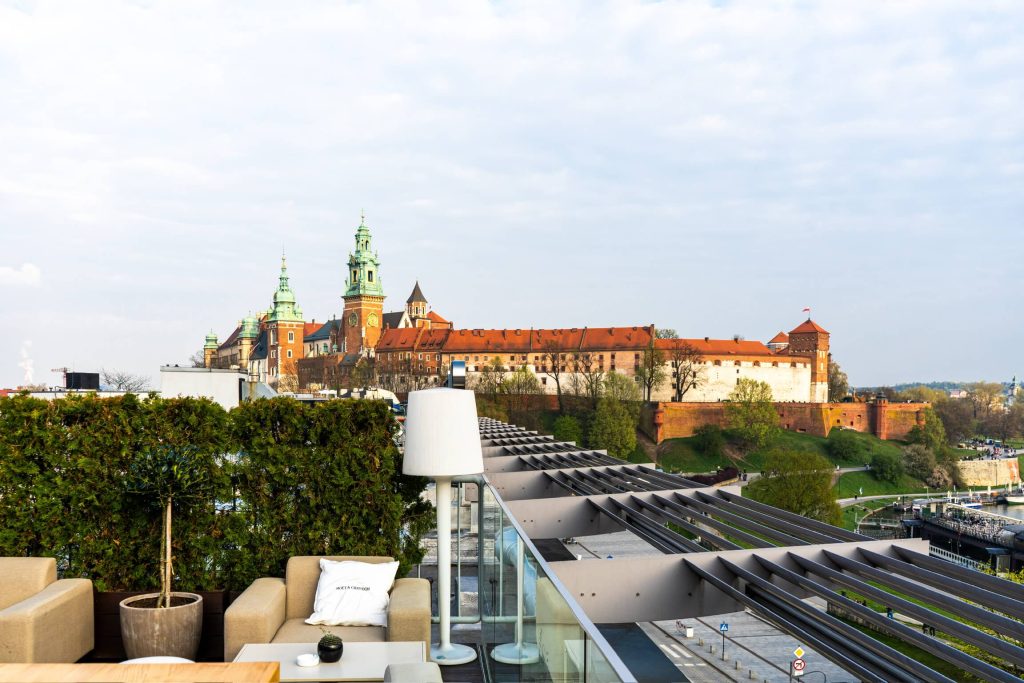
The Sigismund Bell and the view of the Wawel complex along the Vistula River
Walking up inside the cathedral, you’ll reach one of its most remarkable features: the Sigismund Bell. For many years, this was the largest bell in Poland. Weighing nearly 12 tons, it is still rung by hand today by several people pulling thick ropes at the same time. This only happens on special occasions, such as national holidays or important state events.
There is also a local tradition going around: touch the clock for a moment with your left hand and silently make a wish. The wish will then come true, provided you don't share it out loud.
Around the complex, it’s also worth taking a stroll through the inner courtyard and then walking along the Vistula River, where you can see the castle at its most beautiful from the water.
3. Stroll through the Jewish quarter of Kazimierz: Krakow's most characteristic neighborhood
In our opinion, Kazimierz, the former Jewish quarter, is by far the most characterful neighbourhood in Krakow. Its history is heavy and impressive, but today Kazimierz feels like one of the city’s most creative and vibrant districts. In the evenings, the terraces and beer gardens are full, and you can really feel the local buzz and atmosphere.
It’s exactly that contrast that makes this neighbourhood so special. Between old synagogues, memorials and quiet squares, you’ll now find trendy coffee bars, small galleries and restaurants. Step inside Austeria, a Jewish bookstore hidden in a former synagogue. And settle down at Eszeweria, a cozy coffee spot with a real living-room feel. Complete with a cat that might casually jump onto your seat. It’s these kinds of places that give Kazimierz its raw yet creative character.
The history of the Kazimierz district in Krakow
The layers of history in this neighbourhood run deep. Kazimierz was once an independent town, home to a large part of Poland’s Jewish population. It developed into a prosperous and important centre of Jewish life. Later, it became part of Krakow, but the district’s identity has always remained strongly present. What you see today is a place where that past is still tangible. Not loudly in the foreground, but woven into the streets and buildings that have been preserved. These are silent witnesses to a history that has shaped the neighbourhood forever.
Want to learn more about the history of Kazimierz as well as discover its most impressive sights? Then also read our extensive article on the Kazimierz district in Krakow.
4. Walk from Kazimierz to Podgórze: two worlds linked together
Crossing the Vistula from Kazimierz via the Father Bernatek Footbridge, you’ll notice the atmosphere changes almost instantly. Along the railings of this pedestrian bridge, hundreds of love locks are attached, while overhead, art installations seem to float and balance in the air. It’s a lively connection between two neighbourhoods, each with its own completely distinct character.
On the other side lies Podgórze, a quieter and less polished neighbourhood, but one that leaves a strong impression. While Kazimierz is full of creativity and new energy, Podgórze feels more subdued. It’s a place where history is not so much told, but rather felt.
Plac Bohaterów Getta
On the central square, Plac Bohaterów Getta, rows of empty chairs are scattered across the space. It’s a powerful and symbolic image that refers to the history of this place. Parts of the original ghetto wall are still visible in the neighbourhood as well. These are not large or imposing monuments, but subtle reminders that make you pause for a moment.
Together, Kazimierz and Podgórze form an important part of Krakow’s Jewish history, traces of which are still clearly felt throughout the city today.
The neo-Gothic St. Joseph's Church in Podgórze, Krakow
As you continue walking through the neighbourhood, the neo-Gothic St. Joseph’s Church immediately stands out. With its tall towers and light façade, the church almost looks like something out of a fairytale, especially as it appears between the quieter streets of Podgórze.
4. Visit the Stained Glass Museum: traditional stained-glass windows in Krakow
One of the most surprising places we discovered in Krakow is the Stained Glass Museum. In the workshop behind the museum, you can see how traditional stained-glass windows are made and restored by hand. The craftsmanship is immediately visible!
While walking among the colourful designs and large glass panels, you get a glimpse into a craft that has been part of Krakow for generations. Because you can actually see the artists at work here, a visit feels much more personal than in a traditional museum.
What makes it even more special is that you can see the workshop’s work all over Krakow. Many of the stained-glass windows you admire during your city trip were either created or restored here. In St. Mary’s Basilica, for example, you’ll find beautiful historic windows and colourful designs by renowned Polish artists such as Wyspiański and Mehoffer. You can also see impressive stained-glass works in Wawel Cathedral, including an award-winning window in the Holy Cross Chapel.
Another must-see is St. Francis Basilica, where the combination of colorful stained glass windows and painted walls is very impressive.
5. Take a trip to the Wieliczka salt mine from Krakow
Just outside Krakow lies one of the most extraordinary places in Poland: the Wieliczka Salt Mine. It’s not just any mine, but an underground world filled with hidden tunnels, vast chambers, and impressive works of art carved entirely from salt. We were genuinely surprised by it and would definitely recommend it as one of the must-see attractions near Krakow that you shouldn’t miss.
During the tour, you descend deep into the mine, where you discover just how important salt once was. Even the English word “salary” is said to come from the Latin word for salt, as it was so valuable centuries ago that people were partly paid with it. Salt was essential for preserving food long before refrigeration existed.
It’s incredibly impressive to see how much craftsmanship is hidden underground. The mine contains dozens of chapels, many of which have been carved entirely by hand out of salt. The most famous is the enormous Chapel of St. Kinga, where even the chandeliers, sculptures, and floor are made of salt. Miners built this chapel in their spare time. A project that ultimately took decades to complete.
Szczęść Boże
During the walk, you’ll often hear or come across the traditional greeting “Szczęść Boże”, which literally means “God bless you”. It was historically used by miners as a way of greeting each other before heading deep underground. This makes sense, as almost the entire mine was excavated by hand. Only one chamber was created using dynamite; the rest was formed through years of manual work by generations of miners.
Some rooms are still used today for concerts, weddings and masses. A church service even still takes place every Sunday in the underground church.
Buy your ticket here for the Wieliczka Salt Mine with transfer from Krakow
6. Enjoy Krakow's culinary delights
Krakow is not only a city of history and beautiful architecture, but also a destination where you can eat surprisingly well. As you wander through the city centre, you’ll naturally come across local specialities, and for us, this is one of the best parts of a city trip!
We already mentioned the well-known obwarzanek krakowski (the ring-shaped bread typical of Krakow), but another classic you definitely need to try is pierogi (Polish dumplings filled with ingredients such as potato, cheese, meat, or mushrooms). In Kazimierz, you also shouldn’t miss a zapiekanka (a baked baguette topped with a variety of ingredients).
For the best restaurants and bars, Kazimierz is the place to be. Here you’ll find creative hotspots, cozy wine bars, and characterful coffee spots right next to old synagogues and historic buildings. These are our culinary tips for Kazimierz!
The best restaurants and bars in Krakow's Old Town
You should also save the following spots for the best restaurants and bars in Krakow’s Old Town:
Pod Baranem for traditional Polish cuisine served in a classic interior decorated with artworks by Polish artist Edward Dwurnik;
Szara Gęś w Kuchni on Rynek Główny, with a beautiful interior and modern Polish cuisine;
Nowa Prowincja, a cozy coffee shop where many people say you can drink the best hot chocolate in the city;
Farina, a stylish restaurant known for its excellent fish dishes;
Hedwig's at Stradom House, a refined bar where classic cocktails are given a modern twist;
the rooftop bar at the Novotel, where you sip cocktails overlooking the Wawel Castle;
Wódka Café Bar, where you can taste more than 100 different types of vodka, from classic to flavors such as hazelnut, coffee, pear and cherry.
Auschwitz-Birkenau and the history of Krakow
Anyone visiting Krakow quickly notices that the city’s history is present everywhere. Not only in its beautiful squares, churches, and historic buildings, but also in the stories the city carries with it. This history is inseparably linked to the Second World War and the Jewish community that once formed an important part of the city.
About an hour’s drive from Krakow lies Auschwitz-Birkenau, the former concentration and extermination camp where more than one million people were murdered during the Holocaust. A visit here is deeply confronting and leaves a lasting impression.
But Auschwitz-Birkenau does not feel to us like a “sight” you simply add to a checklist of things to do in Krakow. The impact and significance of this place deserve far more context and attention than that.
That’s why we’ve chosen to write a separate article about it, where we go into more detail about the history of Auschwitz-Birkenau, its connection to Krakow, and what you can expect from a visit. Read more about visiting Auschwitz-Birkenau from Krakow here.
The best neighborhoods and places to stay in Krakow
On a city trip to Krakow and looking for a nice hotel? The city has plenty of charming places to stay. Historic Krakow offers a lively city centre, as well as picturesque neighbourhoods. For a central stay, we recommend staying in the Old Town or the Kazimierz district. We stayed at the TRIBE Krakow Old Town Hotel, a comfortable and modern hotel with spacious rooms, great beds, and just a 15-minute walk from the city centre.
Got a taste for it? Here are even more great city trips in Poland
As travel bloggers and travel advisors, we’re often asked: “Which city trip in Europe is really worth it, but just a bit different from the usual destinations?” Our answer is always a shortlist of cities in Poland.
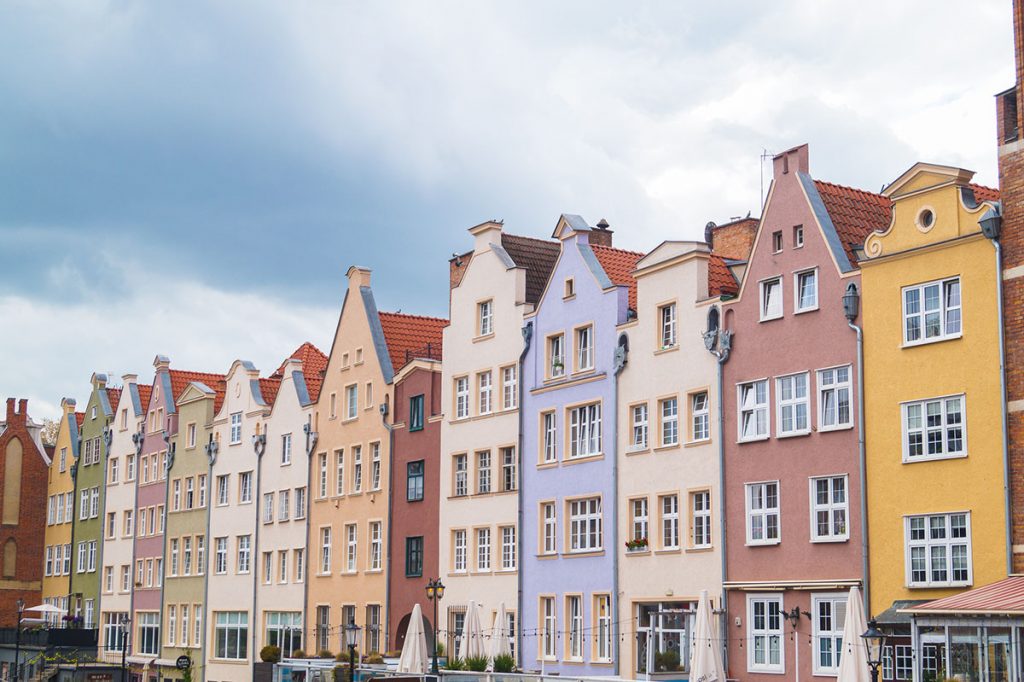
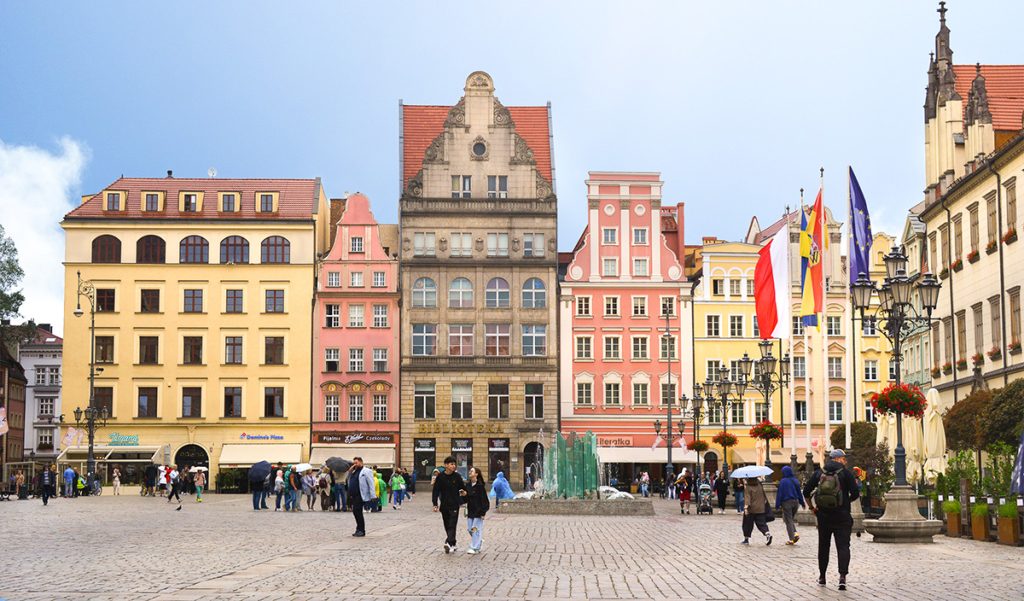
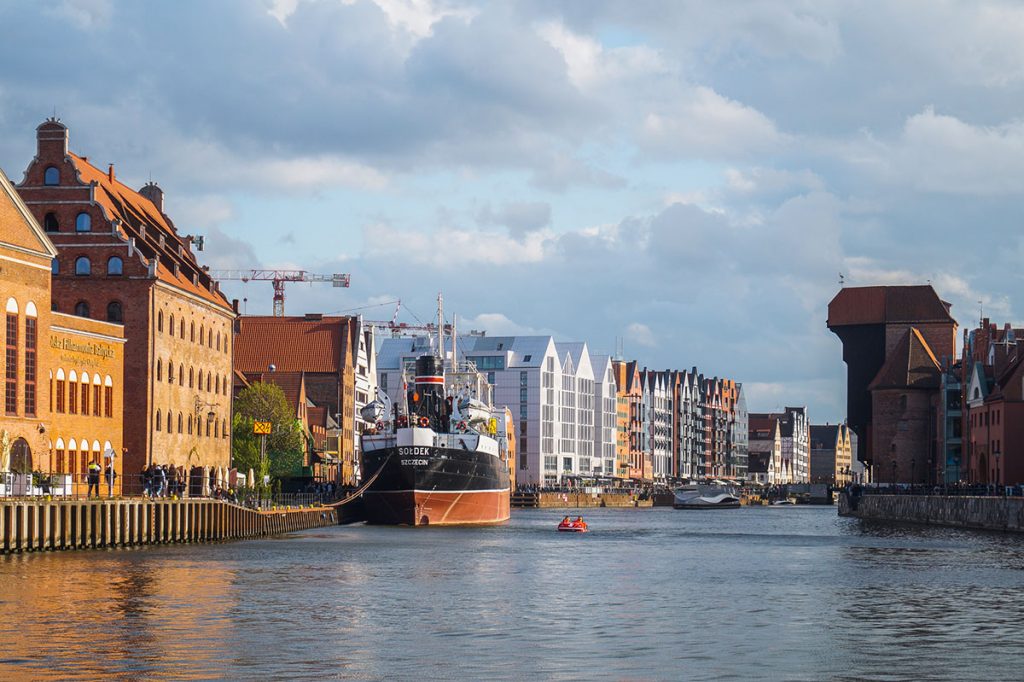
The country has surprised us time and time again over the past few years. Not only because of its beautiful historic cities, but especially because of the combination of culture, history, affordability, and a surprisingly creative and culinary scene. In Gdańsk, for example, we discovered colourful façades and rich maritime history along the Baltic coast, while in Wrocław we found what might be one of the most charming market squares in Europe.
Curious about more destinations in Poland? Below you'll find more great cities and regions that absolutely deserve a place on your bucket list.
Customized Poland Itinerary
Want to turn your city trip to Krakow into a longer journey? Krakow is the perfect starting point to explore more of southern Poland. Combine the city with the natural beauty of the Tatra Mountains, the river gorges of the Pieniny Mountains, and the green, rolling landscapes of the Gorce Mountains. If you’re looking to plan a complete round trip through Poland, we’re happy to help and create a tailor-made itinerary that fully matches your wishes.